

‘I write with my body'
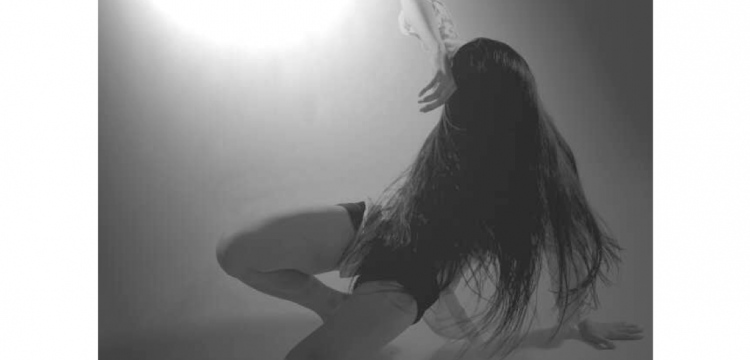
Writing about sex under the motto ‘I write with my body’, some young women writers outrage China. The Chinese call them xinxin renlei – brand new humans.
The first ‘new human’ writer, Wei Hui, shocked the nation in the 1990s with Shanghai Baby. Another Shanghai girl, Mian Mian, followed suit with Candy. Then, Jiu Dan described her own work as ‘prostitute literature’. When Mu Zimei, a magazine journalist of twenty-five, published her intimate diaries online, China was rocked by scandal. Before the Mu Zimei phenomenon could subside, a university teacher released seminude photos of herself online under the pseudonym ‘Bamboo Shadow Clear Pupil’. While Western media and some young Chinese celebrate these women writers as cultural freedom fighters, most Chinese abominate them.
Why all the fuss? Is new human writing pornographic? Hardly. Compared with erotic novels written centuries ago, new human writing is strictly soft-core. Jin Ping Mei (Golden Lotus Vase), a Ming dynasty classic available in quality bookstores on the mainland, has hundreds of scenes that graphically portray sexual intercourse (hetero and homo), orgies, techniques, and accessories. Though new human writing is occasionally illustrated with semi-nude photos of the author, they are nothing like the frankly technical illustrations that often appear in traditional erotic literature.
Does celebrating sexual pleasure contradict Chinese values? On the contrary, traditional Chinese culture venerates sex. It views the sexes as complementary opposites like heaven and earth. When heaven and earth are in harmony, peace and fertility reign; when men and women are in harmony in bed, good health and children result. The Chinese euphemism for sex is ‘spring’ (connoting gentle, warm, pleasant and lively) as Chinese erotic art illustrates. Unlike Western erotic art, which exhibits tension and excitement, Chinese ‘spring palace drawings’ are playful and cheerful, even humorous.
If sex itself is not culpable, are people afraid that the new human decadence will corrupt society, especially the young? No. The Chinese public is too arrogant to fear moral corruption. Anyway, the new humans write only about their exclusive social circle – rock and roll musicians, postmodern poets, avant-garde painters, entertainment journalists and fun-seeking foreigners – a tiny minority whose lifestyle is outside the mainstream. As for bad influence, Chinese classics are more dangerous. Water Margin is a saga of violence and secret societies; Three Kingdoms is about political intrigue; Dream of the Red Chamber concerns the vanity of life. No one knows how many teenagers form gangs inspired by Water Margin, how many adults play dirty tricks learned from Three Kingdoms, or how many Dream of the Red Chamber readers adopt its nihilistic worldview. If moral implications got books banned in China, the classics would be suppressed.
Since new human writing is neither pornographic nor dangerous, why does it upset so many people? In public criticisms on the web, the most frequent accusation is that new human writers are ‘irresponsible’. They expose the details of their promiscuous sex life without considering how other people feel. There is a tacit, pragmatic rule in Chinese society: indecent behavior, including extramarital sex, can be tolerated as long as it does not embarrass anyone. Traditional erotic novels and art were always bedside reading or brothel decoration. Though publicly accessible now, they are too archaic to agitate people. New human writing, by contrast, is a twenty-first century sensation that travels the internet to reach tens of millions of readers – teenagers as well as adults – within seconds.
New human writers are like exhibitionists. Meeting them, people are shocked and embarrassed. ‘Just reading you, I feel ashamed for you’, many critics say. Chinese culture is a shame culture; Chinese morality depends on shame. Nothing feels worse than being ashamed, but nothing liberates more than indifference. ‘I already lost face; what more can I lose?’ Losing face, new humans liberate body and pen. They consider liberation the greatest artistic achievement of all: ‘It is my way of life. If I stop, I am not myself any more.’ They quote Western feminist slogans to show how enlightened they are – avant-garde performing artists seeking individual freedom and female liberation. They are above the multitude still trapped in Confucian morality.
New human irresponsibility irritates the Chinese, and its self-righteousness outrages them. Irritation and outrage notwithstanding, they accept new human writing as a fact of life. The government bans new human books, shuts down websites, and dismisses authors from their jobs, but new humans sprout like mushrooms. Public curiosity and vehement reaction provoke them. Without the attention, new human writers would enjoy neither celebrity nor scandal. They would be invisible, which they hate most. It seems Western pollution is real – it not only spawns a group indifferent to face, but lowers Chinese eroticism from art to manifesto.